
When Everyone Is Told to Tighten Their Belts, Who Can Still Afford to Spend?
Written by Dr. Irma Ariandi
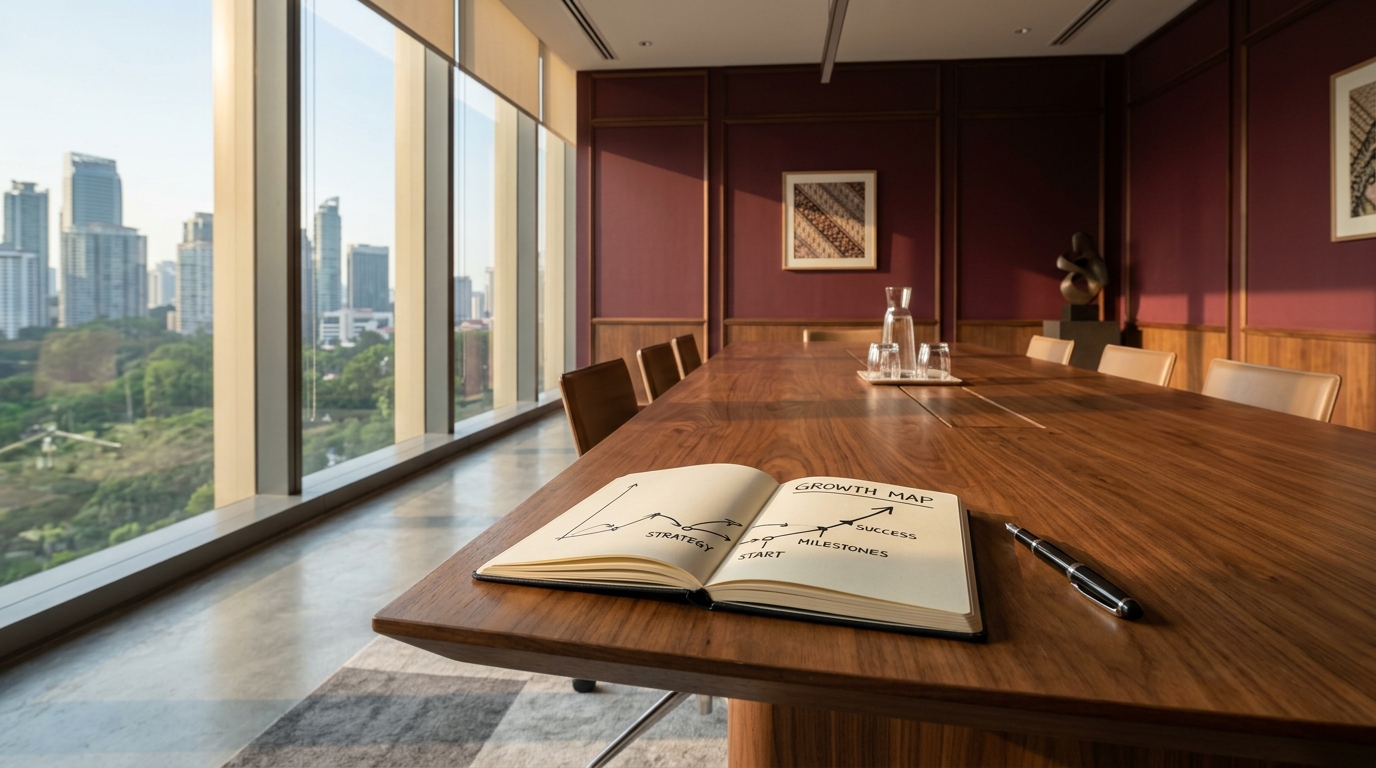
*On an economy that is expected to keep moving, even as the people within it become increasingly afraid to spend.*
Dr. Irma's Column | iInspire Consulting
Advice we often hear and read in public spaces.
When prices go up, we are told to tighten our belts.
When income is not enough, we are told to cut back on spending.
When debt becomes burdensome, we are told to rearrange our priorities.
That advice is not wrong. It is, in fact, quite appropriate for current conditions.
For some families, saving is no longer a choice. It has become the only way to make sure there is still money left until the end of the month.
But have we ever paused to ask what happens to the economy when too many people do the same thing at the same time?
When everyone stops buying, what happens to those who sell?
When customers no longer come in, how are business owners supposed to pay salaries?
When businesses start reducing staff, who still has income left to spend?
And when everyone is trying to save themselves, who exactly is going to save the economy?
Perhaps that is the hardest irony of all to answer sensibly today.
What is sensible for one family is not necessarily enough to save a society.
Consumers are not unwilling to buy
Imagine a mother standing in front of a supermarket shelf.
In her hands are two essential cooking items. She compares the prices, then looks at the balance shown in her account.
She puts one item back.
Not because she does not need it.
But because something else is more urgent.
Her child’s school fees.
Her car instalment.
The electricity bill.
Her elderly mother’s medication.
She no longer buys based on what she wants. In fact, sometimes she has to choose between things that are all equally necessary.
At the checkout counter, she smiles as usual.
No one knows how many small decisions she has already made on the journey from the first shelf to the final counter.
We talk about consumers as though they are just numbers in an economic report.
*Consumer confidence.*
*Household spending.*
*Purchasing power.*
But behind those terms are people calculating their bank balance before filling up the car with petrol.
There are families postponing planned medical treatment.
There are couples cancelling dinner out.
There are parents telling their children, “We won’t be buying anything new this year, okay.”
Consumers have not necessarily lost the desire to spend.
They may simply have lost the courage, because every ringgit that leaves their hands today feels like something that may be desperately needed tomorrow.
Business owners waiting for customers who come less and less
At the far end of a row of shops, a business owner opens up as usual.
The lights are switched on. The air conditioner button is pressed to "On".
The floor is cleaned.
Stock is arranged.
Staff are ready.
Everything looks like an ordinary business day.
Except for one thing that cannot be scheduled.
Customers.
Ten o’clock passes.
Then eleven.
Then midday.
Some walk in, ask for the price, and leave.
Some promise to come back next week.
Some say, “I’ll think about it first.”
The shop owner smiles.
He understands.
He is trying to save money too.
But every delayed purchase leaves behind a question that has no easy answer.
How will the rent be paid?
How will supplier invoices be settled?
How can staff salaries be paid on time?
And how can the business continue, when it was once built with so much confidence?
Society often sees business owners as people who have money.
They see the premises.
They see the signboard.
They see the workers.
They see that the owner is still driving a car.
So they assume everything must be fine.
Yet a business can look busy and still be short on cash.
Sales are not profit.
Profit is not necessarily money sitting in the bank.
And the money that comes in today may already have ten owners waiting for it.
The bank.
The landlord.
The supplier.
The workers.
Statutory agencies.
The business may belong to one person.
But its proceeds have to be shared with so many others before the owner can finally breathe easy.
A small business does not necessarily die because the owner is lazy. Some grow weaker because their customers are also fighting to survive.
Workers with legitimate demands
Then we come to a group that is often caught in the middle.
Workers.
For workers, wages are not merely a company’s operating cost.
Wages put food on the table.
They pay for housing.
Transport.
The needs of children.
So when payday arrives, they are entitled to expect their salary to be paid as it should be.
That is not an excessive demand.
That is their right.
But behind the office door, there may be a small employer staring at the account balance with cold hands.
He knows his responsibility.
He knows his employees have families.
He also knows the money he expected to come in has still not arrived.
This is where two anxieties meet.
A worker fears that their salary will not be enough.
An employer fears being unable to pay that salary.
Both may lose sleep on the same night.
But we must be honest about one thing.
An employer’s difficulty does not erase a worker’s rights.
And a worker’s rights do not make the employer’s difficulty untrue.
We can hold both truths at once.
We do not need to turn one person into a villain in order to understand the suffering of another.
Because in many small businesses, the relationship between employer and worker is not a story of the rich commanding the poor.
Sometimes it is a story of a group of people trying to make sure the place where they earn a living can still open tomorrow morning.
An economy trapped in fear
In economics, there is a concept known as the *paradox of thrift*.
Simply put, when one person reduces spending, they may improve their personal financial position.
But when too many people reduce spending at the same time, demand for goods and services can fall.
Businesses take in less revenue.
Investment is delayed.
Job opportunities may shrink.
Community income may be affected.
In the end, everyone’s effort to save more money does not necessarily produce a stronger economy.
Of course, the impact depends on the economic environment, government policy, investment, trade and many other factors. Saving is not wrong, and overspending is not the answer either.
But this paradox helps us understand something essential.
We need other people to have the confidence to spend, even as we ourselves are losing that confidence.
Business owners hope customers will buy.
Customers hope employers will raise wages.
Employers hope sales will rise.
Suppliers hope invoices will be paid.
The government hopes the economy will continue to grow.
And in the middle of all that hope, everyone looks at their own account balance and says:
“I’ll wait a bit longer.”
We are all waiting.
Unfortunately, an economy cannot move forward through people simply waiting on one another.
When growth figures never reach the dinner table
From time to time, we hear encouraging news.
The economy is growing.
Investment is rising.
The market is performing well.
Some sectors are posting profits.
All of this can be an important indicator of a country’s condition.
Yet for a family struggling to get by, news of economic growth may feel far away.
They are not denying the numbers.
They are only wondering why those numbers are not yet being felt in their own lives.
If the economy is growing, why does the salary seem to run out faster and faster?
If investment is increasing, why are some workers still worried about job stability?
If the nation’s businesses are doing well, why are the shops in their area becoming quieter?
These questions do not necessarily prove that economic reports are wrong.
They remind us that growth and well-being do not always move at the same pace.
An economy can expand without every household feeling the benefits equally.
A large company may have access to capital, technology and international markets.
A small shop, on the other hand, may depend on customers living just a few kilometres away.
When customers in that area start saving more, the effects can be felt almost immediately.
So when we talk about the Malaysian economy, we need to ask more than one question.
Not just, “How much has the economy grown?”
But also:
*Who is benefiting?*
*Who is still being left behind?*
*And how many people appear stable on paper, but are actually living from one payday to the next?*
Saving advice that sometimes forgets reality
There is a kind of advice that is increasingly easy to give.
“Cut back on expensive coffee.”
“Don’t eat out.”
“Don’t buy things you don’t need.”
“Learn to live simply.”
Some of it does make sense.
But that advice can become painful when it is given to people who have long had no luxuries left to cut.
How do you reduce expenses that are already at the bare minimum?
How do you tell someone to save when nearly all of their income is already going toward basic necessities and commitments that are not easy to change?
And how do you advise business owners to increase sales when their own customers are being told to stop spending?
We need to be careful that financial advice does not turn into a form of moral judgement.
Not everyone who is struggling is wasteful.
Not every business owner facing losses is incompetent.
Not every worker asking for a raise is ungrateful.
Sometimes the problem is not that a person has failed to manage life.
Sometimes the space to manage life has simply become too narrow.
Of course, financial discipline remains important.
But discipline alone cannot solve every structural problem.
We cannot ask every family to become experts at saving, then assume the task of building a fair economy is complete.
Who really needs to restore confidence?
I do not believe the solution is to ask people to spend carelessly.
It makes no sense to tell families to go into debt to help businesses.
It is not fair to ask workers to accept late wages in order to save a business.
And it is unrealistic to expect small business owners to keep absorbing losses without limit.
What is needed is not simply more spending.
What is needed is the confidence that life can still be planned without constantly living under the shadow of financial fear.
That confidence does not come from slogans.
It comes when income better matches the cost of living.
When jobs are more stable.
When small businesses have room to grow and access to effective support.
When payments to suppliers are made more systematically.
When assistance reaches those who truly need it.
When economic policy takes into account not only large companies and investment figures, but also small shops, ordinary families and workers who keep the nation’s daily life moving.
And when society understands that the economy is not a race in which everyone tries to save themselves.
It is a network of mutual dependence.
If one part remains under pressure for too long, the others will eventually feel it too.
Perhaps we need to learn to see the people behind the transactions
The next time a customer says they want to delay a purchase, perhaps a business owner can understand that there is a worry left unspoken.
When a business owner appears tired, perhaps a customer can understand that the smile at the counter does not necessarily reflect their financial situation.
When workers ask to be paid on time, employers must remember that there are families depending on that promise.
And when a small employer asks for space to restructure the business, society can judge the situation fairly without ignoring workers’ rights.
Empathy does not pay the bills.
I know.
Empathy also does not replace sound economic policy, disciplined financial management, or legal responsibility.
But without empathy, we become more willing to blame people who are actually struggling within the same system.
Consumers blame business owners for high prices.
Business owners blame customers for not buying.
Employers blame workers for wage costs.
Workers blame employers for insufficient income.
In the end, everyone becomes a target for anger.
Yet the bigger question still remains unanswered.
How do we build an economy that does not merely create wealth, but allows more people to live with enough and with dignity?
We all want to live, not merely survive
There is a difference between living and surviving.
Living is when we still have room to hope.
To take the family out to eat once in a while.
To buy the storybook a child has wanted for a long time.
To save a little money without guilt.
To repair the house before the damage gets worse.
To rest without thinking that every hour not worked is lost income.
Survival, on the other hand, is when all of life becomes a series of calculations.
How much is left?
How much needs to be paid?
How many days more?
How long can we hold out?
We should not treat constant money anxiety as a normal way of life.
Because human beings were not created only to pay bills until the end of their days.
We work to build lives.
We run businesses to create value and livelihood.
We save to prepare for the unexpected.
We spend to meet needs and enjoy part of life’s blessings.
Each has its place.
In Islam, moderation does not mean denying every joy. Frugality does not mean deliberately cutting off other people’s livelihood. And tawakal is not an excuse to let economic injustice continue without any effort to improve it.
Sustenance is an amanah.
So is the power to make decisions that affect other people’s lives.
Perhaps we cannot fix the entire economy in a single day.
But we can still choose to be fair within the space we have.
As buyers.
As business owners.
As employers.
As workers.
As policymakers.
And as human beings.
Before the shop lights go out tonight
Tonight, a mother will count the money left after buying groceries.
A worker will look at the calendar and wait for payday.
A business owner will close the shop, count the day’s takings and try to find a way to pay everything that needs paying.
They may never meet.
They may not know one another’s names.
But their lives are connected, intertwined in the network I described earlier.
The money spent by one customer becomes the sales of a business.
From that revenue, wages are paid.
From those wages, a family buys what it needs.
And from those purchases, another business continues living.
That is how the economy moves.
Not only through charts and reports.
But through human beings who depend on one another.
So when everyone is told to save, let us not be too quick to blame those who can no longer afford to spend.
Perhaps the question we should ask is not why people do not want to buy.
But why more and more people are afraid to use the money they have worked so hard to earn.
And perhaps the measure of a country’s progress is not simply how much money circulates in its economy.
But how many people can still sleep peacefully without fearing the money they will need when tomorrow comes.
Because in the end, we are all looking for the same thing.
"Not extraordinary wealth. Just a little peace with the numbers."
Let's Inspire Possibilities, Dr. Irma Ariandi
*Dr. Irma's Column | iInspire*
Let's Inspire Possibilities.
Work With Us