dental · EN
Clear aligners vs braces: which is better for crooked teeth?
Crooked teeth can affect more than just appearance — they can influence how people feel about smiling, speaking, and even cleaning their teeth day to day. If you’re comparing **clear aligners vs braces**, the best choice is not always the “most popular” one, but the one that fits the teeth, routine, and goals of the person wearing them. For JB parents of teens, local adults, and patients travelling from Singapore or Batam, understanding the differences can make the first consultation feel far less overwhelming.
Clear aligners vs braces: the main differences
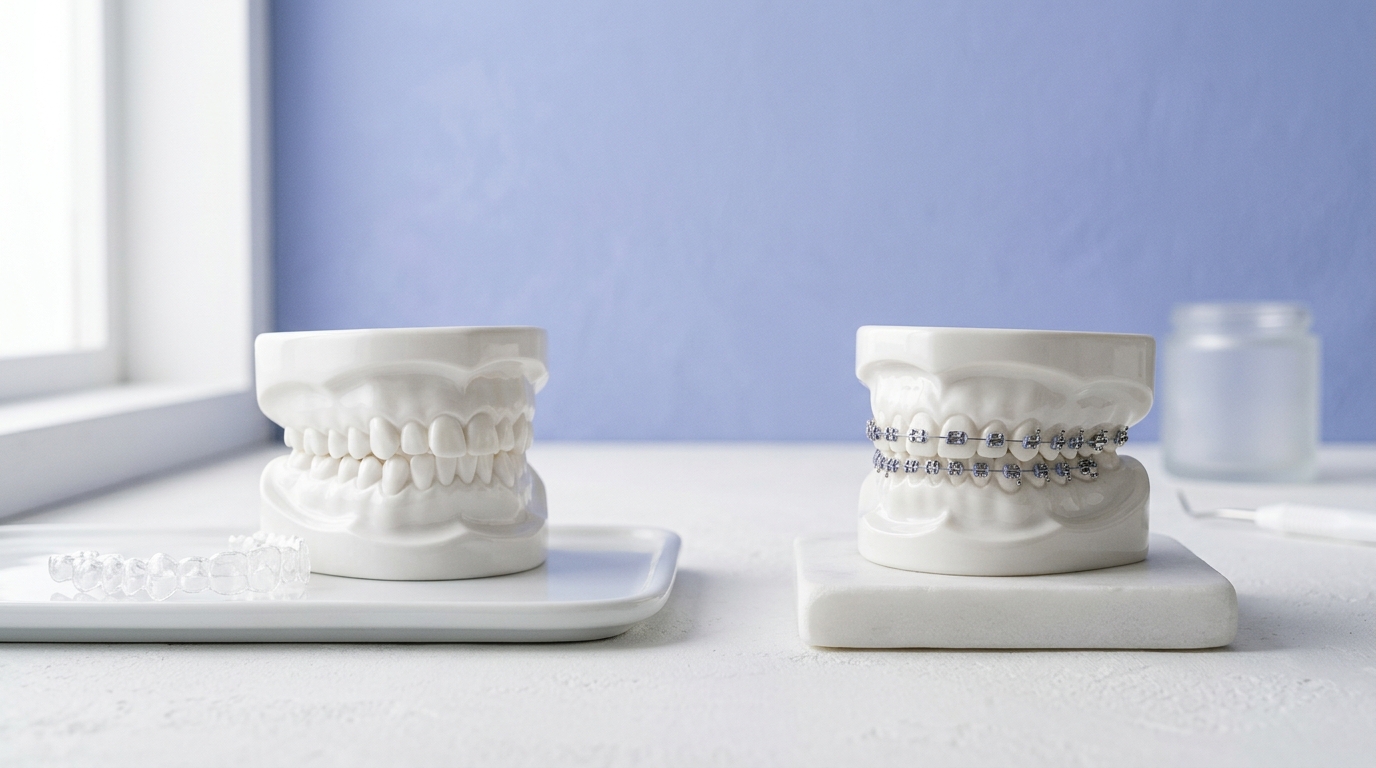
Both clear aligners and braces are designed to move teeth gradually into better alignment. The big difference is how they do it.
Braces use brackets and wires attached to the teeth. They stay in place throughout treatment and are adjusted at intervals by the dentist or orthodontic provider.
Clear aligners are removable trays made to fit over the teeth. A series of trays is usually worn in sequence, with each set intended to guide the teeth a little further over time.
For many people, the decision starts with lifestyle. Some prefer the fixed nature of braces because there is less daily decision-making. Others like clear aligners because they are removable for meals and brushing.
Which option may suit crooked teeth better?
The answer depends on the shape of the problem, not just the look of the appliance.
When braces may be a practical choice
Braces are often considered when teeth need more comprehensive control. Because they are fixed in place, they work continuously and do not depend on remembering to put them back in after meals. For teens who may be busy with school, sports, or after-class activities, that predictability can be reassuring for some families.
Braces may also be easier for patients who feel they might forget to wear removable aligners consistently.
When clear aligners may be appealing
Clear aligners are often attractive to adults and older teens who want a more discreet option. They can be removed for eating and tooth brushing, which some people find more comfortable in daily life.
They may also suit people who want fewer visible changes to their appearance during treatment. For patients who travel between JB, Singapore, or Batam, aligners can feel convenient if they are organised and confident about following the wear schedule.
Comfort, appearance, and daily routine
No orthodontic option is completely “felt” the same by everyone.
Braces may feel more noticeable because of the brackets and wires. Some patients need time to adapt to the sensation on the inner lips and cheeks. Certain foods may also require more care to avoid damage to the appliance.
Clear aligners may feel smoother in the mouth, but they still require discipline. They need to be worn as instructed, removed and stored properly, and kept clean. If they are not worn regularly, progress can slow down.
From a routine perspective, braces are always on, while aligners ask for more self-management. That difference can matter a lot in real life.

Cost, visits, and practical considerations
People often compare clear aligners vs braces by price first, but the full picture includes more than the appliance itself.
The overall treatment plan may depend on:
how complex the alignment issue is
how long treatment is expected to take
how often follow-up visits are needed
whether extra appliances or refinements are required
Because every mouth is different, it is not helpful to assume one option is always cheaper or better value. A consultation can clarify what is suitable for the teeth, what the treatment process may look like, and what follow-up care is involved.
For families, convenience can matter too. Parents may prefer a treatment that is easier to supervise. Adults may prefer something that fits work meetings and social settings more discreetly. Patients crossing the border or traveling from nearby regions may want to factor in appointment timing and follow-up frequency.
How to decide between aligners and braces
A simple way to think about it is this:
Choose the option that matches the type of tooth movement needed
Consider how disciplined the wearer can be with daily care
Think about comfort, appearance, and lifestyle
Ask what the dentist recommends after examining the teeth
The best orthodontic plan is not just about looks. It is about finding a treatment that can realistically be followed over time.
Questions to ask at a consultation
If you are unsure where to start, you may want to ask:
Am I a suitable candidate for clear aligners?
Would braces be more effective for my teeth?
How often would follow-up visits be needed?
What daily habits will I need to change during treatment?
What are the pros and limitations of each option for my situation?
These questions can help you move from general research to a more personal decision.

A thoughtful choice for a confident smile
There is no one-size-fits-all answer in **clear aligners vs braces**. Both can be valuable orthodontic tools, and both come with their own strengths. The right choice depends on the teeth, the routine, and the kind of support the patient will need along the way.
If you are comparing options for yourself or your teen, a professional assessment is the most reliable next step.
Book a consultation at Klinik Pergigian Irma Ariandi to find out which option suits your teeth.
**Note: This article is for general education only. A clinical examination is required for personal advice about dental treatment options.**
Dr. Irma
DDS (UKM) · Klinik Pergigian Irma Ariandi
Ditulis oleh Dr. Irma (DDS, UKM), Klinik Pergigian Irma Ariandi.
Profil doktor →MASIH TIDAK PASTI?
Tanya Dr. Irma. Beritahu kami secara ringkas apa yang mengganggu anda, dan pasukan klinik kami akan pandu anda ke langkah seterusnya yang sewajarnya.
Komunikasi WhatsApp membantu klinik mengarahkan anda — ia bukan diagnosis.