dental · EN
Eating with braces: foods to avoid and how to care for your brackets every day
Eating with braces: foods to avoid and how to care for your brackets every day
When you first start **eating with braces**, it’s natural to worry: “What can I eat?”, “Will a bracket fall off?”, “What if it hurts?” The good news is that with a few adjustments, your daily meals can still be comfortable and manageable. The key is to choose braces-friendly foods, avoid anything too hard or sticky, and maintain consistent oral hygiene.

Foods to avoid when you have braces
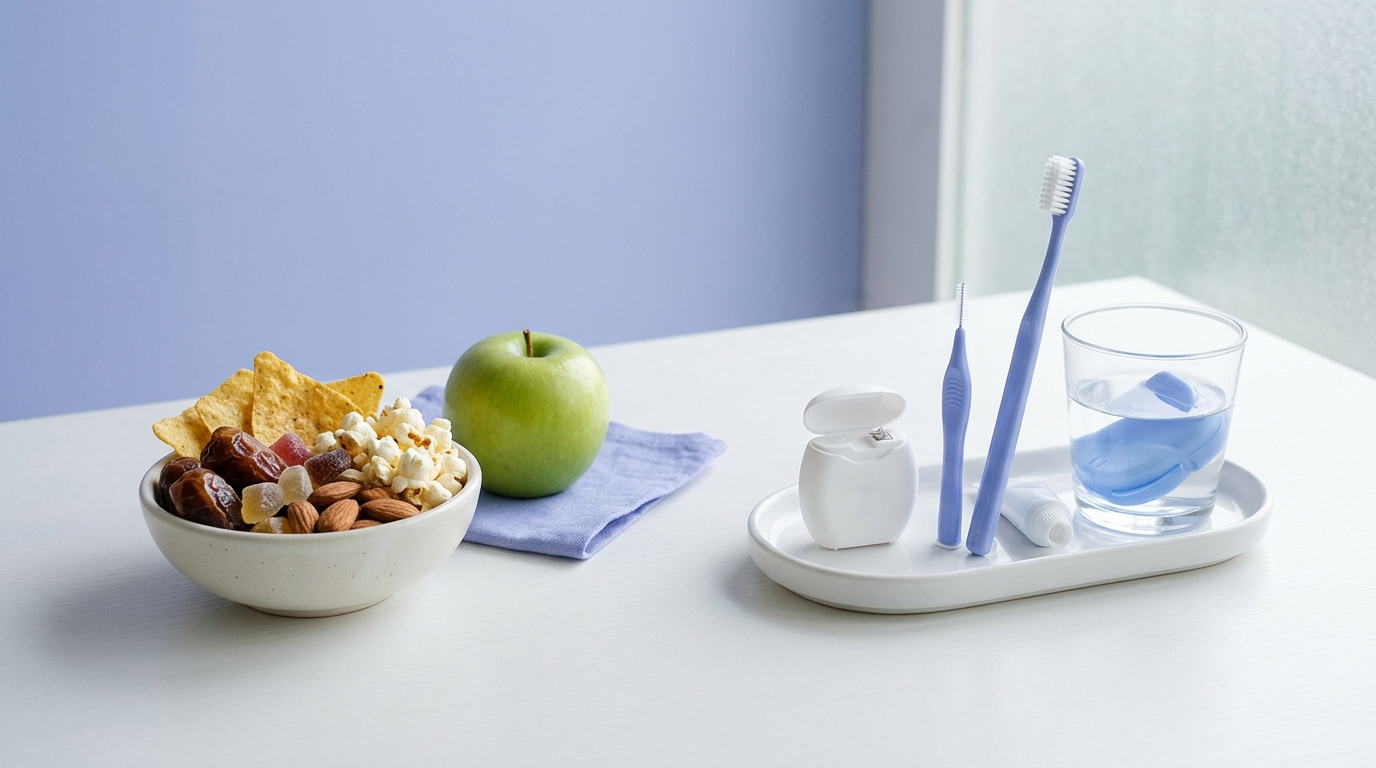
Braces help straighten your teeth, but the brackets and wire also need careful protection. There are a few types of food that are best avoided, especially if you want to reduce the risk of damaging a bracket or bending the wire.
1. Hard foods
Hard foods can put pressure on brackets and wires. Examples include:
ice
hard nuts
hard candy
bones in meat
very hard fruit if bitten into directly
If you want to eat fruit like apples or pears, it’s better to cut them into small pieces first.
2. Sticky foods
Sticky foods can cling to braces and are difficult to clean off. Examples include:
chewing gum
caramel
taffy
sweet foods that stick to teeth for a long time
These foods are not only inconvenient to eat, but can also increase the amount of food trapped around brackets.
3. Very chewy or tough foods
Some foods may seem harmless but can be challenging for braces:
tough meat
very chewy bread or cakes
foods that require biting hard with the front teeth
If you want to eat meat, choose softer cuts and cut them into small pieces so they are easier to chew.
4. Very crusty or crunchy foods
Food that is too crunchy can also make your brackets feel strained, especially if you have just started wearing braces or have recently had your wire adjusted. If you want to eat crackers, hard biscuits, or other crunchy foods, have them in moderation and chew slowly.
Food choices that are more braces-friendly
The good news is that there are still plenty of foods suitable for braces wearers. Some options that are usually more comfortable include:
porridge, oats, or soft noodles
rice with food cut into small pieces
eggs
soft fish
soup
well-cooked vegetables
fruit cut into small pieces
yogurt or other soft foods
If your teeth feel sensitive after treatment or after an adjustment, soft foods can help you eat more comfortably for a while.
How to care for your brackets every day
Daily care is very important so food doesn’t get trapped easily and your mouth stays clean. Here are a few simple steps you can follow every day.
1. Brush your teeth carefully after eating
Brush your teeth at least twice a day, and even better if you can clean your teeth after meals. Focus on:
the top and bottom of the brackets
between the wires
the area along the gumline
Use a suitable toothbrush so cleaning is easier and gentler on your teeth.
2. Clean hard-to-reach areas
Braces have small spaces where food can easily get trapped. Floss or interdental cleaning tools can help remove debris that a regular toothbrush may miss. If you’re not sure about the correct technique, ask for guidance during your dental appointment.
3. Rinse after eating
If you don’t have time to brush yet, rinsing with water can help remove trapped food temporarily. It’s a simple step, but still useful, especially after eating out or at school.
4. Check for loose brackets or poking wires
When brushing, check whether any bracket is loose, a wire is sticking out, or any part feels sharp. If there is a problem, don’t try to fix it yourself in a way that could injure your mouth. Get a professional examination.
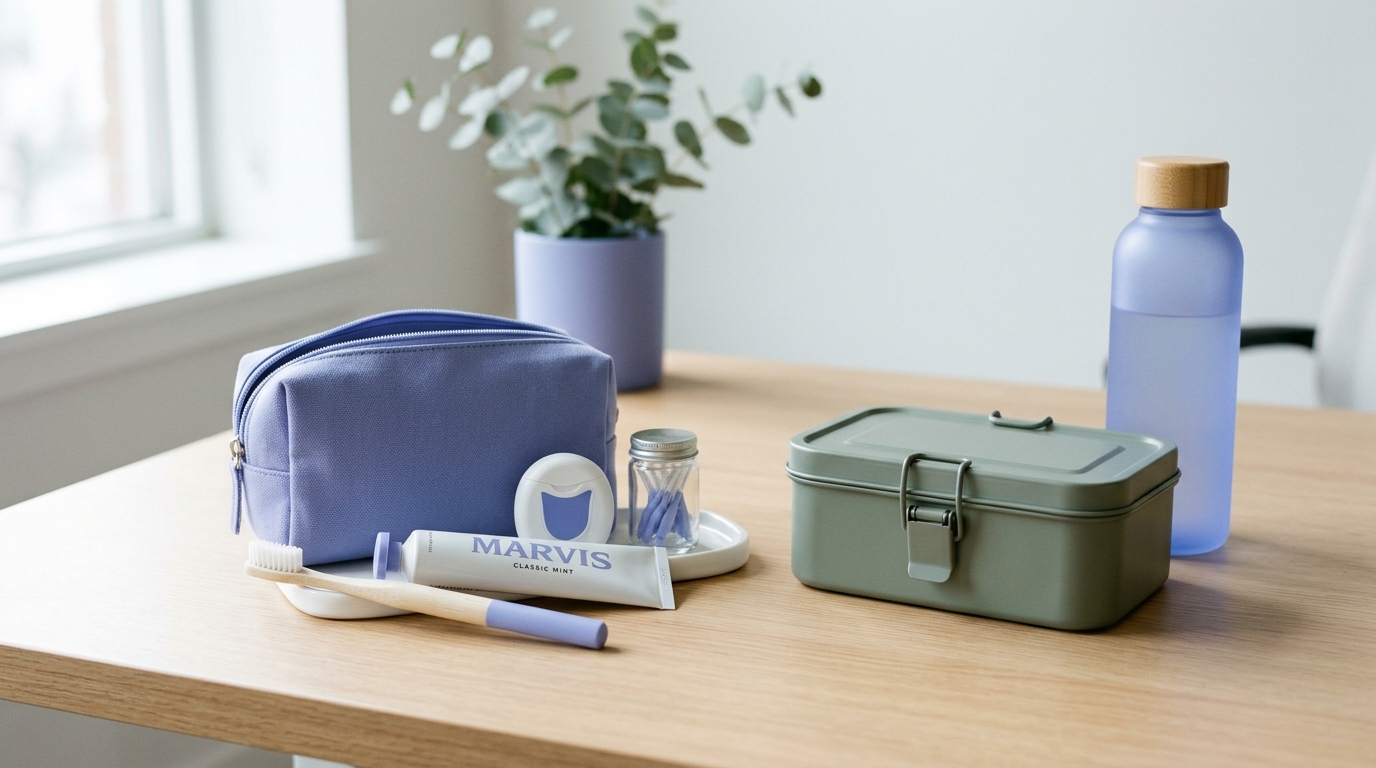
5. Prepare a small kit to carry with you
For school teens or busy adults, a small kit can be very helpful. You can keep:
a small toothbrush
travel-size toothpaste
floss
a small mirror
dental wax if recommended by your dentist
Easy tips for eating out or at school
When eating outside, choose foods that are easy to chew and not too sticky. If the food comes in large pieces, cut it up before eating. Avoid biting directly into hard foods with your front teeth. Eat slowly and carefully so your braces stay in better condition.
For parents, helping your child prepare soft meals and small oral-care items can make their daily routine much easier. For teens, small habits like rinsing the mouth after meals can make a big difference.
When to be extra careful
If you have just had braces fitted or have recently had an adjustment, your teeth may feel more sensitive for a while. During this time, choose softer foods and chew slowly. If a bracket comes off, a wire pokes you, or discomfort continues for a long time, get it checked.
Quick summary
Eating with braces does not have to be difficult. The important thing is to know which foods to avoid, choose softer alternatives, and care for your brackets every day. With a consistent routine, you can eat more confidently and comfortably throughout treatment.
If you want braces guidance tailored to your situation, **book a consultation at Klinik Pergigian Irma Ariandi**.
*This article is for general educational purposes only and is not a substitute for a clinical examination. For advice suited to your dental condition, please seek an assessment from a dentist.*
Dr. Irma
DDS (UKM) · Klinik Pergigian Irma Ariandi
எழுதியது: Dr. Irma (DDS, UKM), Klinik Pergigian Irma Ariandi.
மருத்துவர் சுயவிவரம் →இன்னும் உறுதியாக இல்லையா?
Dr. Irma-விடம் கேளுங்கள். உங்கள் கவலையைச் சுருக்கமாகச் சொல்லுங்கள்; அடுத்த சரியான படியை எங்கள் குழு வழிகாட்டும்.
WhatsApp தொடர்பு உங்களை வழிநடத்த உதவும் — அது நோய் கண்டறிதல் அல்ல.