
Orthodontics
A proven way to straighten teeth — planned carefully, explained honestly.
Conventional braces remain the most widely used orthodontic treatment for teenagers and adults. Here is how we assess, plan and support braces treatment at our Johor Bahru clinic.
Who may consider this treatment
Braces may be considered for:
- Teenagers with crowded, overlapping or spaced teeth
- Patients with a noticeable bite difference
- Young adults who want a fixed treatment they do not need to manage daily
- Parents seeking a clinic that explains the process to the whole family
What problem it addresses
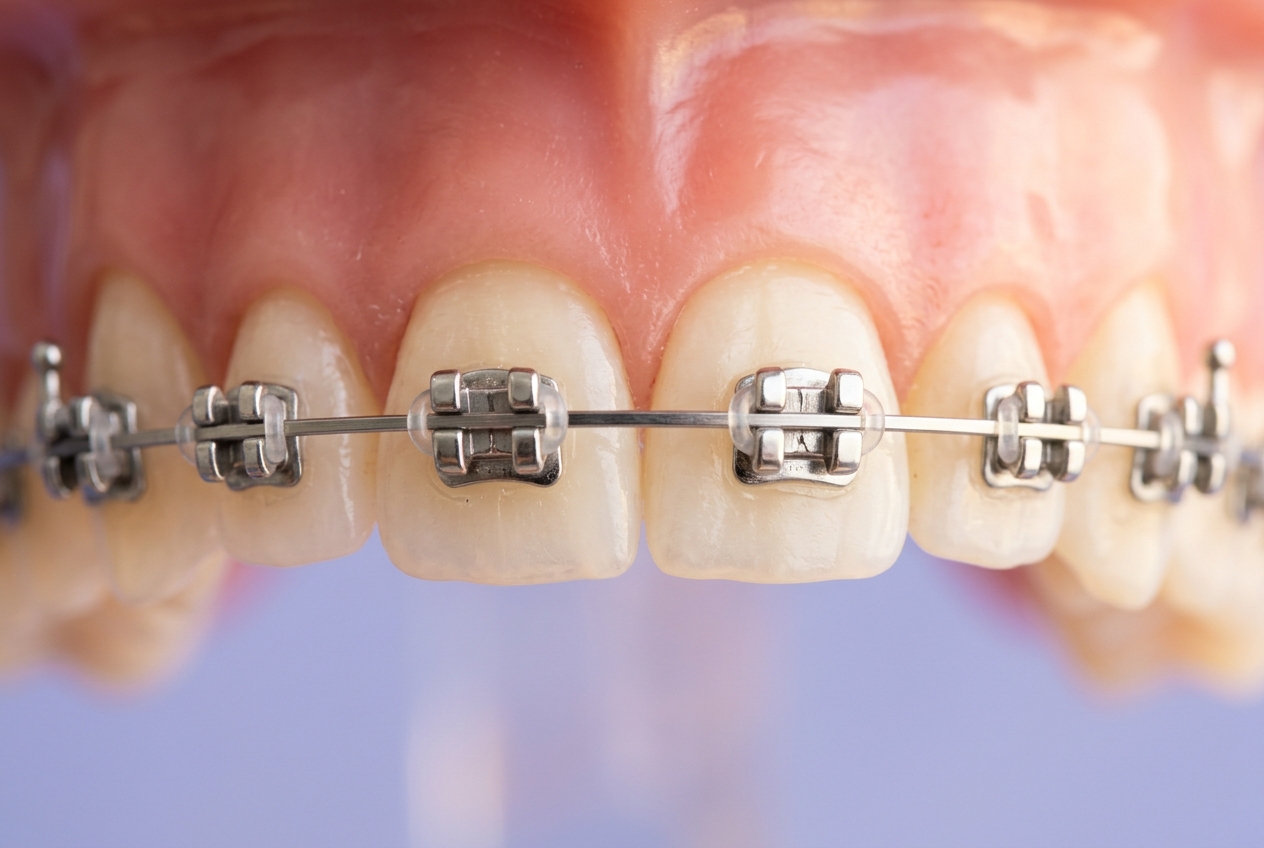
Braces move teeth gradually into a better position using brackets, wires and controlled force. They address crowding, spacing and certain bite differences. Whether braces are the right choice — and when to start — is an individual clinical decision made after assessment.
How assessment works
- A full examination of teeth, bite and oral health
- Records or x-rays where clinically needed
- A plain-language explanation of what we see
- A discussion of the options — braces, clear aligners, or monitoring first
- Fees explained in writing before you decide anything
Treatment options
The choices we discuss at assessment:
Conventional braces
Fixed brackets and wires — the option most teenagers and parents choose, because it does not depend on daily discipline the way removable appliances do.
Clear aligners (where suitable)
For some teenagers, clear aligners may also be considered. Suitability depends on the type of problem and daily wear responsibility — see our clear aligners page.
Monitoring first
In some cases the honest recommendation is to wait and monitor development. An early assessment does not always mean early treatment.
Our philosophy
Treatment journey
ASSESS
A proper look, a proper diagnosis.
EXPLAIN
We explain what we see, in plain language.
OPTIONS
Every reasonable option, on the table.
FEES
Fees before treatment, not after.
DECIDE
You decide. We advise.
TREAT
Treatment, at your pace.
REVIEW
We review, adjust and maintain.
Every patient is different. Your actual pathway is always explained by the doctor after examination.
What patients should know
What patients should know:
- Treatment duration varies by individual — your doctor will give an estimate after assessment, not before
- Braces need care: brushing around brackets matters, and we will show you how
- Adjustment visits are a regular part of treatment — plan the rhythm with the clinic
- Fees are explained in writing before treatment starts, including what follow-up covers
Typical follow-up considerations
Adjustment visits are part of treatment, and retention keeps the result in place afterwards. If a bracket breaks or a wire irritates, contact the clinic — practical help is part of the plan.
For teenagers — what parents should know
Most braces patients are teenagers, and most of our first conversations are with parents. Visit the Teen Smile parents’ guide for what the first assessment is like and what to ask.
Teen SmileCommon questions
Common questions
What age is suitable for braces?
It depends on the teeth and jaw development. Many families begin orthodontic assessment in the mixed-dentition years, with active treatment often starting in the teenage years — but the right timing for your child is a clinical decision, not a date.
Braces or clear aligners for my teenager?
Both can work; it depends on the type of problem and your teen’s readiness to wear and care for removable aligners. We explain both honestly at assessment.
What if a bracket breaks during school?
Contact the clinic. You will get practical guidance on the phone and, if needed, a repair visit. Breaks are part of real orthodontic life.
How are fees structured?
Transparently. You receive an explanation and a written breakdown before treatment begins — nothing is decided after the fact.
Still exploring?
Message the clinic. We will help you understand whether this treatment suits you — honestly.