
Restorative
Broken or missing front tooth? Here is what FRC means — in plain language.
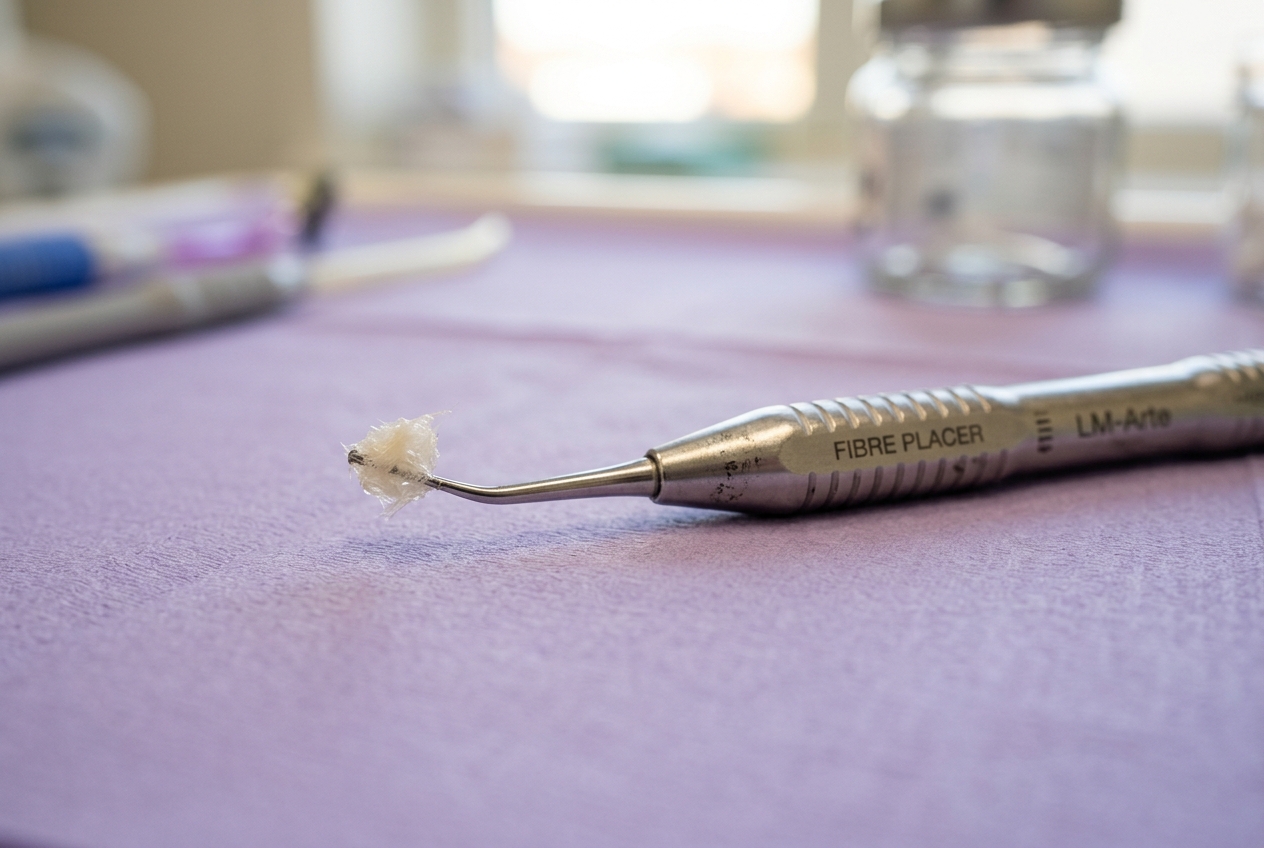
Fibre Reinforced Composite (FRC) is a modern option that may be considered for a missing front tooth or a broken one, in selected situations. We start with the problem — because that is what you are actually searching for.
Who may consider this treatment
Patients who ask us about FRC usually have:
- A missing front tooth they would like replaced without surgery
- A broken front tooth where a fibre-reinforced option may be considered
- A wish to understand alternatives to conventional bridges and implants
What problem it addresses
FRC uses a fibre-reinforced structure to rebuild or replace a tooth, using tooth-coloured composite. It is minimally invasive in selected cases. Whether FRC suits you depends on your bite, the position of the tooth and the health of neighbouring teeth — which is exactly what the assessment is for.
How assessment works
- An examination of the broken or missing tooth and its neighbours
- A discussion of what you want to achieve, honestly weighed against what is clinically possible
- All reasonable options on the table — FRC, zirconia bridge, conventional options
- Fees explained in writing before anything is decided
Treatment options
The choices we discuss at assessment:
FRC (Fibre Reinforced Composite)
A fibre-reinforced, tooth-coloured solution built chairside in selected cases. Minimally invasive — but not suitable for every situation.
Zirconia bridge
A strong ceramic bridge may be considered instead, depending on your clinical condition. See our zirconia page.
Other options
Conventional bridges or other approaches may be more appropriate for some patients. The assessment decides, not the marketing.
Our philosophy
Treatment journey
ASSESS
A proper look, a proper diagnosis.
EXPLAIN
We explain what we see, in plain language.
OPTIONS
Every reasonable option, on the table.
FEES
Fees before treatment, not after.
DECIDE
You decide. We advise.
TREAT
Treatment, at your pace.
REVIEW
We review, adjust and maintain.
Every patient is different. Your actual pathway is always explained by the doctor after examination.
What patients should know
What patients should know:
- FRC is not suitable for every case — bite forces, tooth position and neighbouring teeth all matter
- It is often completed without drilling down neighbouring teeth — but whether that applies to you is a clinical question, not a promise
- Care and longevity vary by case; your doctor will explain what FRC can and cannot offer in your situation
Typical follow-up considerations
FRC work is reviewed like any restoration: at routine visits, and whenever you notice a change. Contact the clinic if anything feels different.
International patients
Selected restorative treatments — including FRC — are among the reasons patients from Indonesia/Batam visit the clinic. See the Indonesia/Batam page.
International PatientsCommon questions
Common questions
I broke my front tooth — what are my options?
Options may include FRC, a crown, a bridge or other approaches, depending on how the tooth broke and its overall health. Come in for an assessment — we will lay the options out honestly.
Is FRC only for front teeth?
FRC is mostly discussed for front-tooth situations, where bite forces are smaller. Whether it suits a different area of your mouth is a clinical question for the assessment.
How long does an FRC bridge last?
It varies by case, bite and home care. No honest dentist quotes a fixed lifespan without examining you — we will tell you what your specific situation suggests.
Is the procedure painful?
FRC work is generally a gentle procedure in selected cases, but every mouth is different. We explain what to expect before anything begins — you decide from there.
Still exploring?
Message the clinic. We will help you understand whether this treatment suits you — honestly.